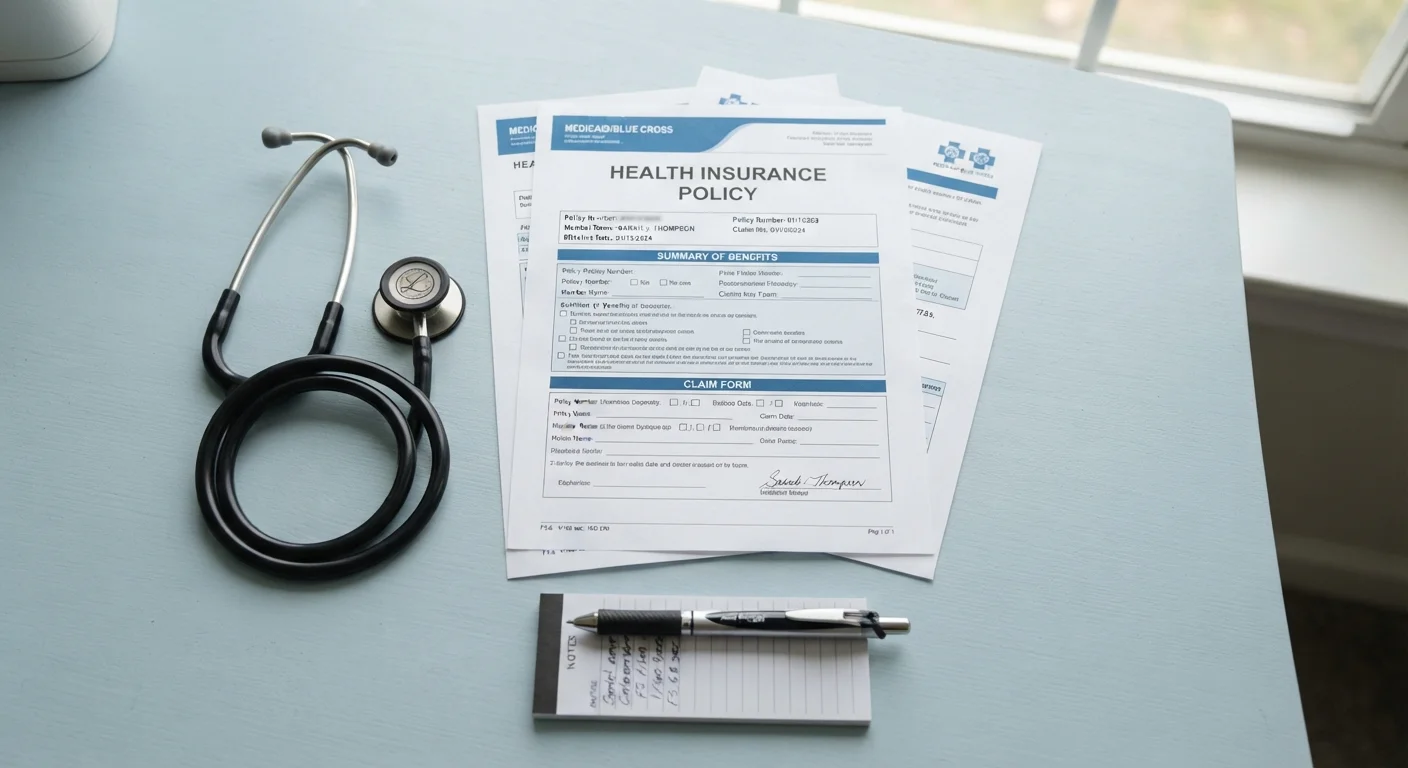
Use this checklist to compare plans methodically during open enrollment. Covers networks, drug formularies, cost-sharing limits, and more.
Why a checklist matters here
Open enrollment gives you a defined window to select or change health coverage. The decision affects your costs, your access to care, and how much you pay out of pocket if something unexpected happens. Working through a structured set of questions before you commit reduces the chance of a costly mismatch between the plan you choose and the care you actually use.
Confirm that your primary care doctor is in-network for each plan you are considering, using the insurer's online directory.Must
Verify that any specialists you see regularly, or anticipate needing, are also in-network.Must
Check whether your preferred hospital or surgery center participates in the plan's network.Must
Ask whether the plan requires a referral from a primary care doctor before you can see a specialist.Should
Prescription drug coverage
Look up each of your current medications on the plan's formulary (drug list) to confirm they are covered.Must
Note the tier each drug falls into, because cost-sharing varies by tier and affects what you pay per fill.Must
Ask whether prior authorization is required for any of your medications before the plan will cover them.Should
Check whether the plan allows 90-day mail-order supplies, which can reduce per-dose cost for maintenance medications.Nice to have
Cost structure
Record the monthly premium for each plan and calculate the annual total, not just the per-month figure.Must
Identify the annual deductible and whether it applies separately to medical and prescription costs.Must
Find the annual out-of-pocket maximum, which is the most you would pay in covered costs in a given plan year.Must
Compare copays and coinsurance rates for the services you use most, such as primary care visits, urgent care, and lab work.Should
Plan type and structure
Identify whether the plan is an HMO, PPO, EPO, or HDHP, since each type handles referrals and out-of-network care differently; see the plan type comparison for a full breakdown.Must
If the plan is an HDHP, confirm whether it is paired with a health savings account (HSA) and what the contribution limits are.Should
Ask whether out-of-network care is covered at all, and if so, what the cost-sharing looks like compared to in-network rates.Should
Special circumstances
If you are 65 or older or approaching Medicare eligibility, verify how the plan coordinates with Medicare and whether switching affects your coverage timeline; the senior health and Medicare hub has additional context.Must
Confirm whether preventive services such as annual screenings and recommended vaccines are covered without cost-sharing; this reference on no-cost preventive care lists what ACA-compliant plans typically include.Should
Gather the following before you start: last year's explanation of benefits (if you have one), a list of your current prescriptions with dosages, the names of your primary care doctor and any specialists you see regularly, and your most recent tax return or income estimate if you may qualify for subsidies.
Required
Insurer's provider directory
Verify that your doctors and hospitals are listed as in-network for each plan you are comparing.
Required
Plan's drug formulary
Confirm your current prescriptions are covered and identify their cost-sharing tier.
Required
Summary of Benefits and Coverage (SBC)
Compare standardized cost-sharing details across plans using a consistent format required by federal law.
Optional
Last year's explanation of benefits
Estimate how much care you actually used in the prior year to gauge which cost structure fits your pattern.
Optional
Income estimate or prior tax return
Determine whether you qualify for premium tax credits or cost-sharing reductions on the ACA Marketplace.
Work through each group in order. Flag any item where two plans give you different answers; those differences are where the real comparison happens. This article is general health insurance information and is not personalized advice. Consult a licensed insurance agent or navigator for guidance specific to your situation.
Provider directories can be out of date
Insurers are required to maintain accurate directories, but listings do not always reflect recent changes. Call your doctor's office directly to confirm they accept the specific plan and are taking new patients if needed. Do not rely solely on an online search result.
Health Editorial Team is the collective byline for our editorial team and contributor network. Articles published under this byline or an editorial pen name are researched, written, and reviewed according to our editorial standards for clarity, consistency, and independence before publication.
The content provided on our blog site traverses numerous categories, offering readers valuable and practical information. Readers can use the editorial team’s research and data to gain more insights into their topics of interest. However, they are requested not to treat the articles as conclusive. The website team cannot be held responsible for differences in data or inaccuracies found across other platforms. Please also note that the site might also miss out on various schemes and offers available that the readers may find more beneficial than the ones we cover.