
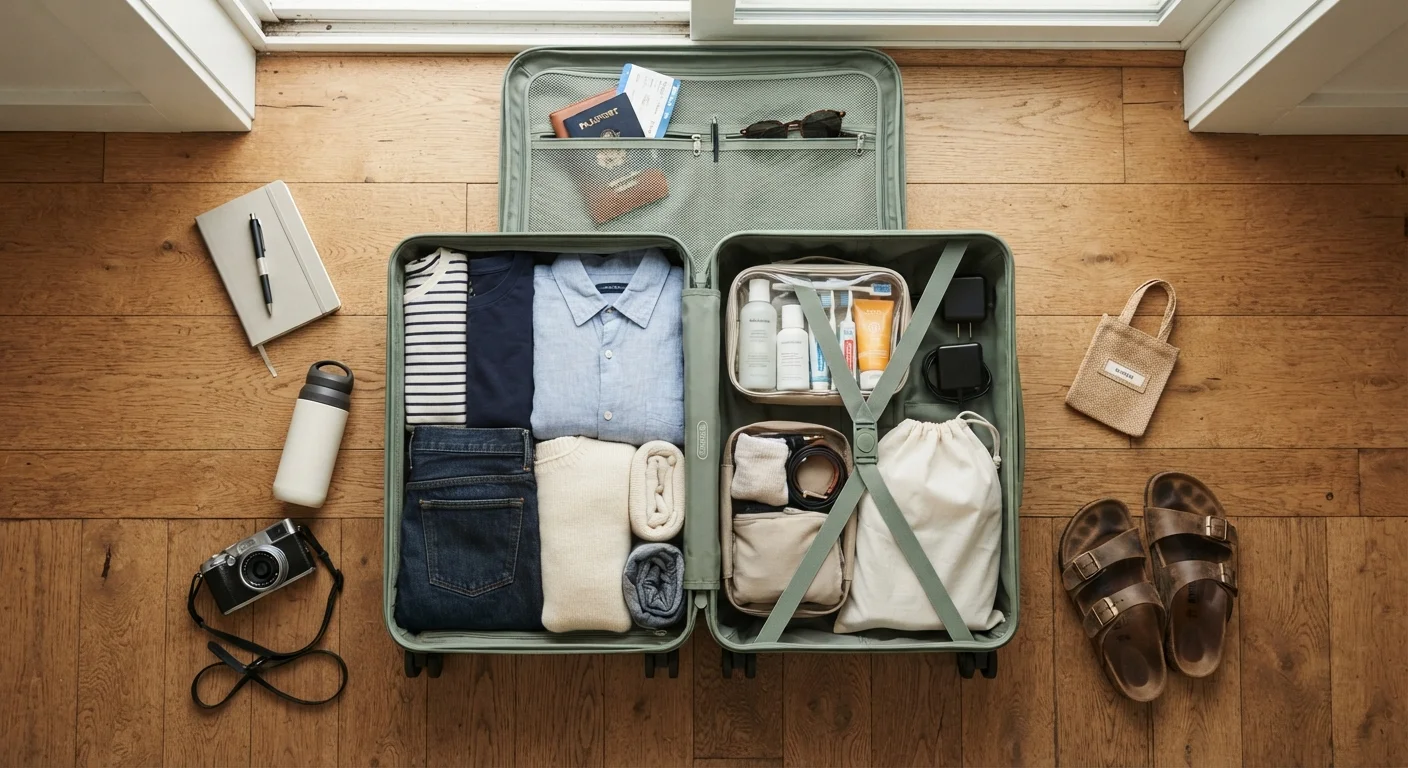
What carry-on only travel actually means
Carry-on only travel means fitting everything for your trip into a bag that meets your airline's overhead bin size limits, typically around 22 x 14 x 9 inches for most U.S. carriers, plus a personal item such as a backpack or tote. No checked bags, no bag-drop counters, no waiting at baggage claim.
The approach has grown steadily among frequent flyers as checked bag fees have risen. It is not just a minimalist preference; for many travelers it is a straightforward cost decision. If you want to understand how baggage fees fit into the broader picture of flight costs, this breakdown of flying versus driving costs puts the numbers in context.
The case for going carry-on only
The advantages are concrete and cumulative.
Avoids checked bag fees on every flight
Most major U.S. airlines charge $35 or more each way for a first checked bag. A round trip for two people can add $140 or more before any other costs.
Eliminates baggage claim wait time
Walking straight from the gate to ground transportation saves 20 to 45 minutes on most domestic flights, which matters on tight connections or late arrivals.
Removes the risk of lost or delayed luggage
The U.S. Department of Transportation tracks mishandled bag reports from major carriers each year. Carry-on bags stay with you, which removes that risk entirely.
Easier to move through transit hubs
A single carry-on and personal item are manageable on buses, trains, and ferries without needing extra help or bulky storage.
Faster check-in and security for some travelers
Skipping the bag-drop counter means one less queue, which adds up noticeably on trips with multiple flights.
One point worth noting: airports vary considerably in how long baggage claim takes. Domestic U.S. flights typically deliver bags within 20 to 30 minutes of landing, but delays and misroutes do happen. Skipping that process entirely removes a variable that is hard to plan around.
Where the approach runs into trouble
Carry-on only is not the right choice for every trip or every traveler.
Volume is genuinely limited for longer trips
Two weeks or more of clothing, particularly for varied climates or formal occasions, is difficult to fit in one carry-on without access to laundry facilities at the destination.
Certain items cannot travel in cabin bags
Liquids over 3.4 ounces, full-size toiletries, some sporting equipment, and many tools must go in checked luggage under TSA rules. Travelers who need these items have no practical workaround.
Overhead bin space is not guaranteed
On full flights, gate agents sometimes require passengers to check carry-ons at the door, often at the same price as a standard checked bag, removing the fee savings.
Budget airline policies can eliminate the cost benefit
Some ultra-low-cost carriers charge for overhead-bin bags while only a small personal item is included in the base fare. The savings depend entirely on the specific airline and fare class.
Packing discipline takes real planning
Traveling light is straightforward in concept but requires deliberate decisions about clothing, toiletries, and gear that infrequent travelers may find time-consuming to work out.
Older travelers or anyone with mobility concerns should also consider whether lifting a bag into an overhead bin repeatedly is practical. This guide to traveling as a senior covers how physical considerations can shape luggage decisions alongside other trip-planning factors.
Carry-on rules differ by airline and route
There is no single universal carry-on size standard across U.S. and international carriers. Regional flights operated by smaller aircraft sometimes have stricter size limits than mainline routes. Always check the specific policy for every carrier and flight segment in your itinerary, including code-share partners, before packing.
Making it work in practice
A few specific habits make carry-on only more sustainable across longer or more varied trips.
Pack fabrics that travel well. Merino wool and synthetic blends resist odor and dry overnight, which means fewer items cover more days. A week-long trip often requires only four or five tops when you plan for one wash midway through.
Packing cubes compress clothing and keep categories separate, which matters when you are repacking in a small hotel room. Rolling clothes rather than folding them generally uses space more efficiently for soft items, while folding works better for stiffer fabrics.
Check your airline's specific carry-on policy before every trip, not just for your main carrier. Code-share flights and regional legs sometimes operate under different size or fee rules. Budget carriers in particular may charge for overhead-bin bags while allowing a free personal item only. This article on travel booking mistakes covers how overlooked fees can quietly raise trip costs.
Finally, consider timing. Traveling in shoulder season often means less crowded overhead bins and more flexibility in how you dress for the destination. Shoulder season travel explained walks through how off-peak timing affects the full trip experience, not just prices.