How a deductible actually works at claim time
When you file a collision or comprehensive claim, your insurer calculates the total covered loss. Your deductible comes off the top, and the insurer pays the remainder, up to the policy limit. If your car sustains $3,200 in hail damage and your comprehensive deductible is $1,000, you receive $2,200.
The deductible is not a fee you pay to your insurer. You pay it directly to the repair shop or body shop handling the work. The insurer then pays its portion to the shop, or sometimes to you directly depending on the claim process. Either way, the math is the same: your share first, then theirs.
One detail worth knowing: the deductible applies per claim. If you have two separate incidents in one year, you pay your deductible twice. There is no annual cap on how many times it applies, unlike health insurance plans that reset after an out-of-pocket maximum. That distinction matters when people compare the two; for a fuller look at how health insurance cost-sharing works differently, see how health insurance deductibles, copays, and coinsurance work.
The trade-off between your deductible and your premium
Insurers price premiums partly based on how much financial risk you are taking on yourself. When you accept a higher deductible, you absorb more of the cost after a claim, so the insurer's exposure shrinks, and your premium reflects that.
The savings from raising a deductible vary by insurer, vehicle, location, and driver profile, but the relationship is consistent: higher deductible, lower premium. The question is whether the savings are worth the added out-of-pocket risk.
$500
Most commonly chosen auto deductible
Industry data from the Insurance Information Institute indicates $500 is the deductible level most drivers select for collision coverage.
~15-30%
Typical premium reduction when doubling deductible
The Insurance Information Institute notes that raising a deductible from $200 to $500 can reduce collision and comprehensive premium costs by roughly 15 to 30 percent, though actual savings vary by insurer and driver profile.
A rough way to evaluate this: calculate how long it would take for the annual premium savings to equal your deductible increase. If raising your deductible from $500 to $1,000 saves $120 per year in premiums, it takes about four years of savings to cover that extra $500 exposure. If you file a claim in year one, you come out behind. If you go several years without a collision claim, you come out ahead.
This is general math, not a guarantee of any outcome. Your actual savings and claim frequency will differ. If your rate changed at renewal, revisiting your deductible at that time is a reasonable step.
What limits your deductible choices
If you are financing or leasing your vehicle, your lender or lessor almost always requires you to carry both collision and comprehensive coverage, and they may set a ceiling on the deductible. A common requirement is a maximum $500 deductible, though terms vary. Check your loan or lease paperwork before assuming you can choose freely.
State law does not typically dictate deductible amounts, but insurer offerings differ. Not every amount is available from every company. Most offer standard tiers such as $250, $500, $1,000, and $1,500, but you may find other amounts depending on the insurer.
Some policies include a disappearing deductible or vanishing deductible feature, where the deductible decreases over time without a claim. These are add-ons, sometimes called accident forgiveness or deductible reward programs, and they vary widely by insurer. Read the terms carefully, since the premium cost of such features may offset the benefit.
Choosing a deductible that fits your situation
The most practical question is: could you pay this amount today if your car was hit in a parking lot tomorrow? If the answer is no, a lower deductible is worth considering, even if it raises your monthly premium.
Drivers who have reliable savings, drive infrequently, or park in low-risk areas often choose higher deductibles because the premium savings accumulate over time and the likelihood of a claim is lower. Drivers with a long daily commute, those in areas with high accident rates or severe weather, or anyone without much liquid savings often find a lower deductible more manageable.
Collision coverage carries more deductible risk than comprehensive because collision claims arise from driving. Comprehensive covers events outside your control, such as theft, vandalism, or weather damage. Some drivers set a higher collision deductible and a lower comprehensive deductible, or drop collision coverage entirely on older vehicles. For more on when that trade-off makes sense, see when dropping full coverage on an older car makes financial sense.
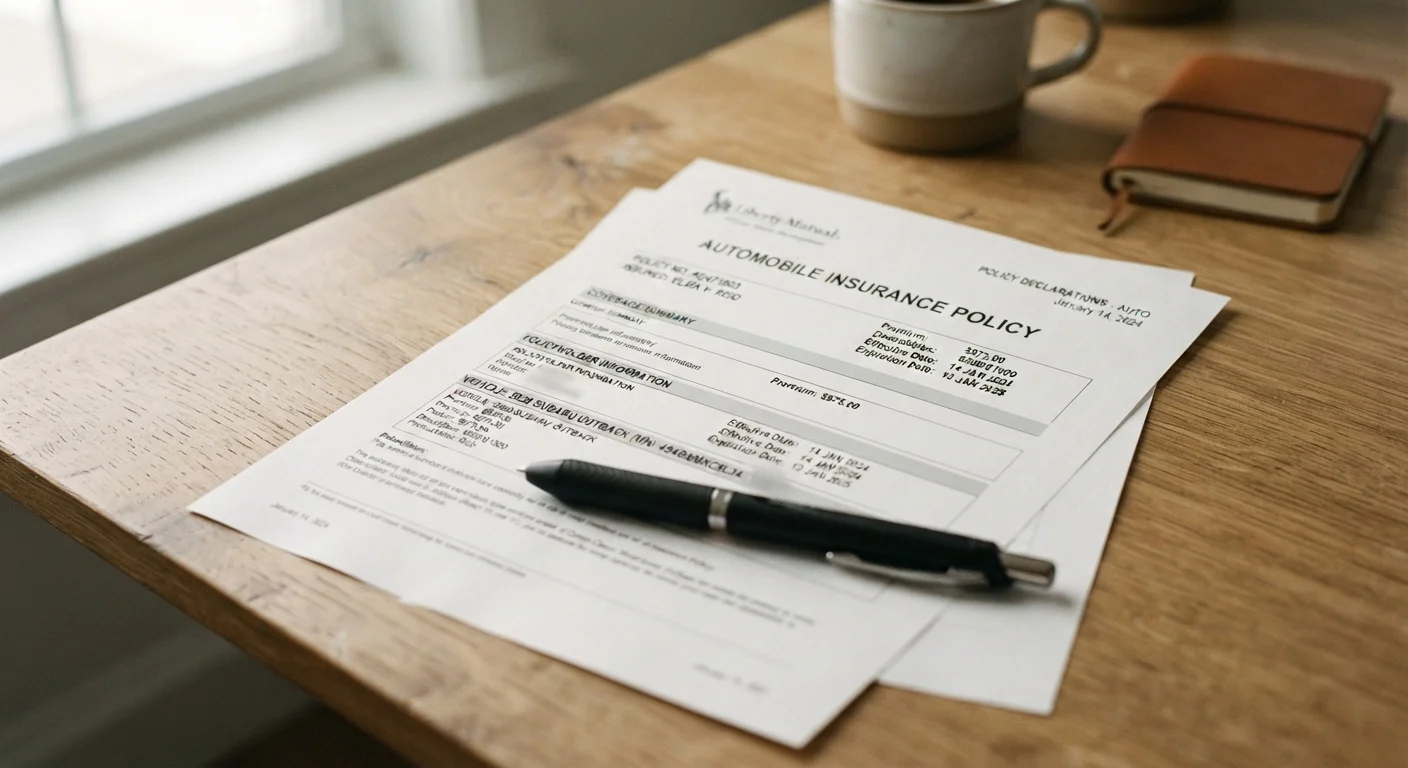
Whatever amount you choose, it should appear clearly in your policy declarations page. If you are unsure what you agreed to, that page is the place to check. A licensed insurance agent can also walk you through how changing your deductible would affect your specific policy.
This article is for general informational purposes only and is not personalized insurance, financial, or legal advice. Coverage terms, deductible options, and premiums vary by insurer, policy, and state. Read your actual policy documents and consult a licensed insurance agent or adviser for guidance on your specific situation.