
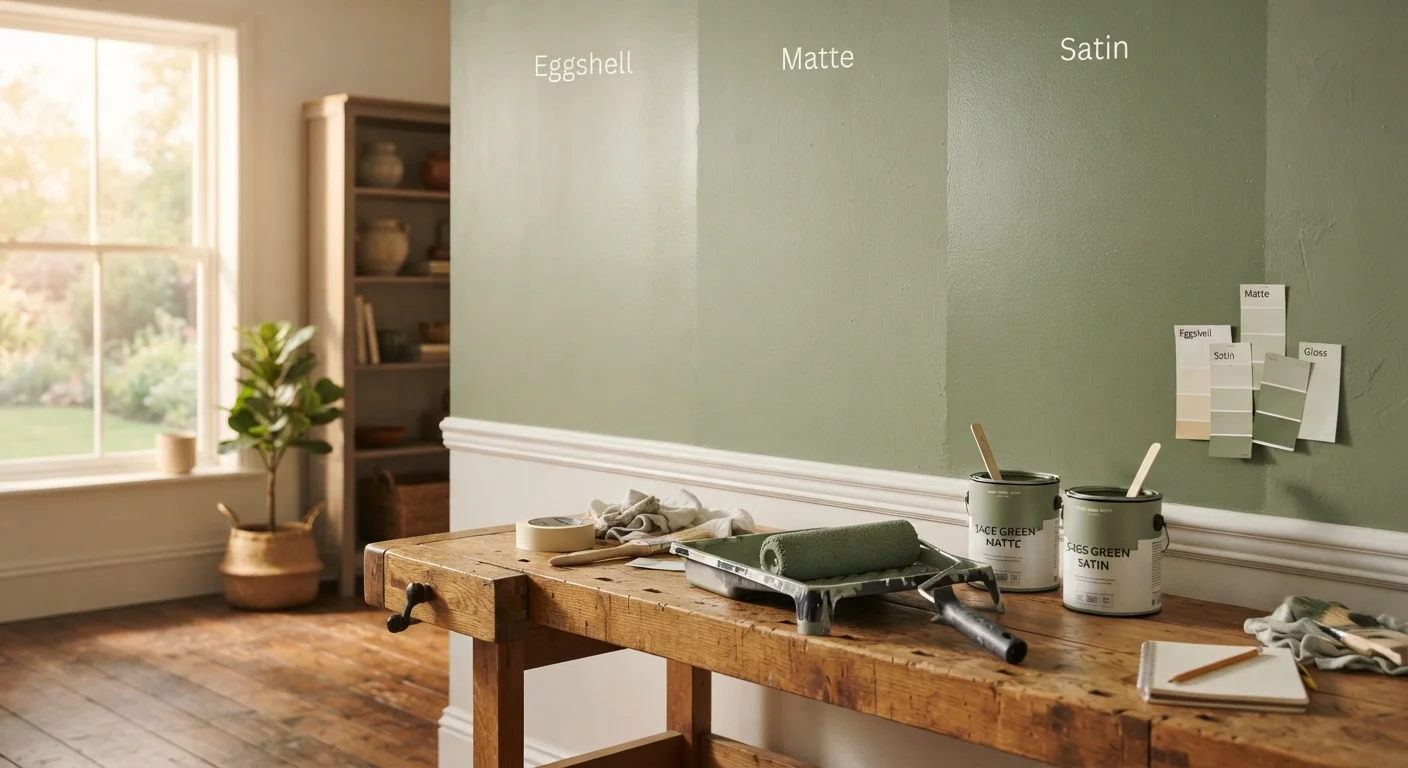
What paint sheen actually means
Every can of paint carries a sheen level, which describes how much light the dried surface reflects. A higher sheen means more light bounces back, giving walls a shinier appearance. That reflectivity also affects how well the paint resists moisture and cleans up when wiped down.
Sheen is not just a style choice. It affects durability, hide (how well the paint covers imperfections), and maintenance. Walls with many dents and dings tend to look better under a flatter finish because low sheen scatters light rather than drawing attention to bumps. Smooth, well-prepped surfaces can handle glossier options.
Sheen
The degree of light a dried paint surface reflects. Higher sheen means more shine and generally more durability.
Flat (matte) finish
A paint finish with little to no reflectivity. It hides surface flaws well but is harder to clean without scuffing.
Eggshell finish
A low-luster finish with slightly more sheen than flat. It tolerates light cleaning and works well in low-traffic living areas.
Satin finish
A mid-range finish with a soft pearl-like sheen. More washable than eggshell and suitable for moderate-traffic rooms.
Semi-gloss finish
A noticeably shiny finish that resists moisture and cleans easily. Standard for kitchens, bathrooms, and trim work.
High-gloss finish
The shiniest paint finish available. Very durable and easy to wipe down, but shows surface imperfections clearly.
The main finish types and where they work
Flat or matte has the least reflectivity of any finish. It absorbs light and hides surface flaws well, which makes it a common choice for ceilings and low-traffic bedroom walls. The trade-off is that flat paint marks easily and is harder to wipe clean without dulling the finish.
Eggshell sits just above flat on the sheen scale. The name comes from its soft, barely-there luster, similar to the surface of an actual eggshell. It tolerates light cleaning and works well in living rooms, dining rooms, and adult bedrooms where occasional scuffs are possible but heavy moisture is not.
Satin has a gentle, pearl-like sheen and holds up to regular cleaning. It is a practical choice for hallways, kids' rooms, and family spaces that see daily wear. Satin also works on trim and doors when you want some definition without a high shine.
Semi-gloss reflects noticeably more light and is easy to wipe down. Kitchens, bathrooms, trim work, window frames, and door casings all benefit from semi-gloss because moisture and cooking grease wipe off without damaging the finish.
High-gloss is the shiniest option and the most durable. Cabinets, furniture, and exterior doors often use high-gloss paint. It shows surface imperfections clearly, so proper prep work before painting matters more here than with any other finish.
| Lowest sheen | Flat or matte |
| Best for ceilings | Flat |
| Best for living rooms | Eggshell or satin |
| Best for kitchens and bathrooms | Semi-gloss |
| Best for trim and doors | Semi-gloss or high-gloss |
| Easiest to touch up | Flat or eggshell |
Room-by-room quick guide
Ceilings almost always get flat paint. The low sheen minimizes any unevenness in the surface and keeps the eye focused on the walls. Flat ceiling paint is also formulated to resist splatter during application.
Living rooms and dining rooms typically do well with eggshell or satin, depending on how much activity they see. A formal dining room used mainly for holidays can stay at eggshell. A room where kids do homework and pets roam benefits from the added durability of satin.
Kitchens and bathrooms need a finish that handles humidity and easy cleaning. Semi-gloss is the standard recommendation for these spaces. Some homeowners use satin on bathroom walls and semi-gloss only on trim to keep the overall look from feeling too shiny.
Trim, baseboards, and doors get semi-gloss or high-gloss almost universally. The contrast between a matte wall and a shinier trim is intentional and traditional in American homes. It frames the architecture without requiring two different colors.
For a broader look at how material choices affect home maintenance, see our guide to home insulation types and R-values, which follows the same room-by-room approach.
A few practical things to keep in mind
Paint finish and paint quality are separate decisions. A high-quality flat paint can outlast a low-quality satin in the same room. When comparing options at the store, check both the finish and the formulation details on the label.
Switching finishes between rooms in an open floor plan can create visual inconsistency. If your kitchen flows directly into a living area, consider using the same finish on shared walls and reserving the shinier option for cabinets and trim only.
Touching up semi-gloss and high-gloss walls is harder than touching up flat or eggshell surfaces. Shiny finishes reflect light in ways that make patches visible, especially if the original paint has faded slightly. Keeping a small amount of leftover paint labeled by room and finish can save a lot of frustration later.
This article is for general informational purposes only. Specific product performance can vary by brand, formulation, and application conditions. Always follow the manufacturer's directions on the paint label.