
Why housing decisions carry more weight in your 50s and 60s
Housing is most households' largest monthly expense and, for many, their largest asset. In your 50s and 60s, decisions about where and how you live intersect directly with retirement timing, healthcare access, and long-term financial stability. A choice that worked well at 35 may no longer fit at 60.
What changes at this stage is the stakes. You have fewer working years to recover from a financial misstep, your physical needs may evolve, and flexibility can matter as much as stability. Both renting and owning can support a good retirement, but they carry very different trade-offs. Common planning errors among early retirees often involve housing decisions made without fully accounting for illiquidity or rising fixed costs.
This is general information, not financial advice
The considerations here are educational and apply broadly to adults reassessing their housing situation. They are not a substitute for personalized advice. A licensed financial planner or housing counselor can help you model the actual numbers for your situation, including how a housing decision connects to your retirement income plan. See a financial checklist for adults approaching retirement for related planning steps.
What owning a home offers at this life stage
For many older Americans, owning a home has been a decades-long investment. By their late 50s, many owners are approaching the end of their mortgage or have paid it off entirely. That changes the monthly math considerably: a paid-off home removes a large fixed expense and can free up significant cash flow in retirement.
Equity builds a retirement asset over time
A paid-off or nearly paid-off home can provide a significant financial cushion, whether through a future sale, a reverse mortgage, or simply eliminating a monthly payment.
Fixed-rate mortgage locks in predictable payments
Unlike rent, which a landlord can raise at renewal, a fixed-rate mortgage payment stays the same, making long-term budgeting easier.
Freedom to modify the property
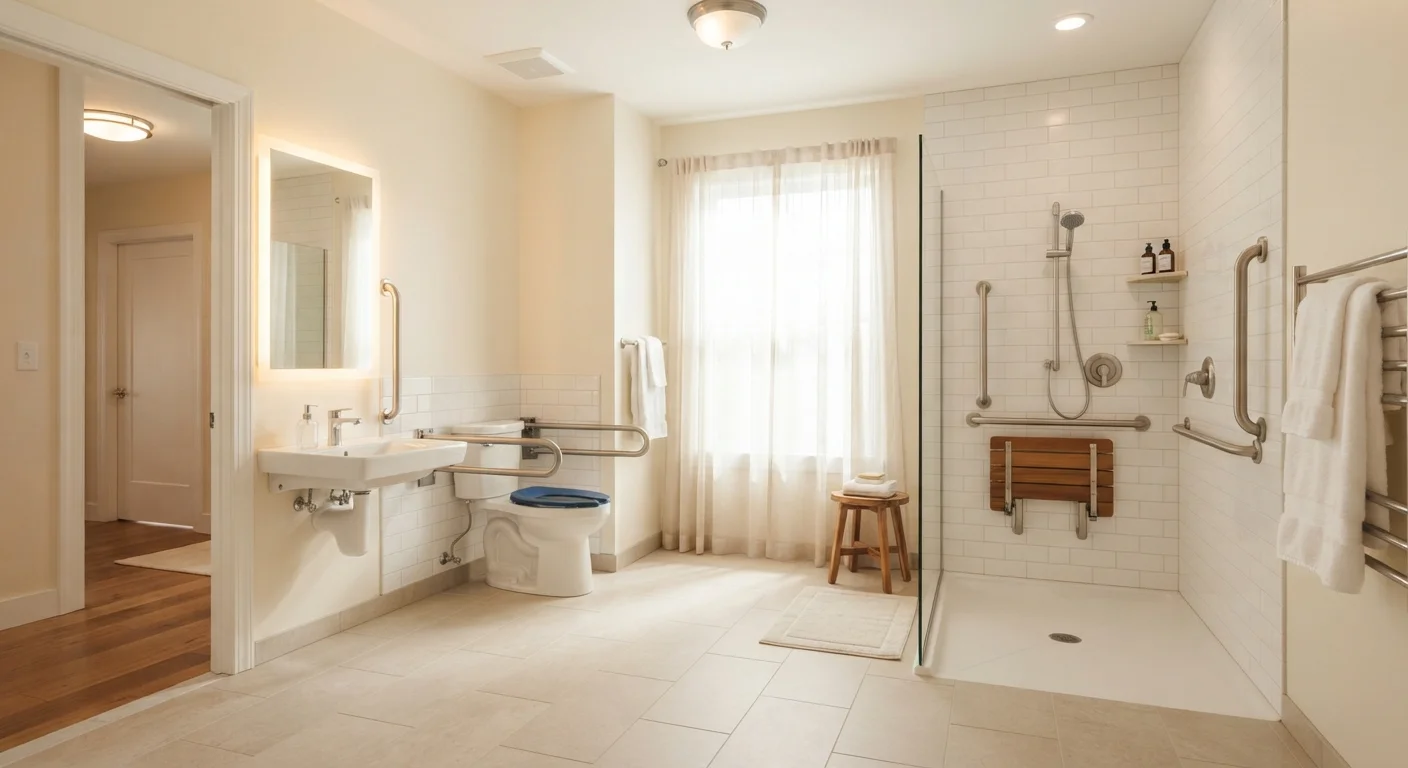
Owners can install grab bars, widen doorways, or make other modifications that support aging in place without needing a landlord's approval. See home modifications that support independence for a practical overview.
Potential tax benefits for some homeowners
Mortgage interest and property tax deductions may reduce taxable income for those who itemize, though the benefit varies widely by individual situation and should be reviewed with a tax professional.
Ownership also gives people the ability to adapt their home as their needs change. Installing accessibility features, for instance, is far simpler when you control the property. Aging in place is a realistic option for owners willing to invest in the right modifications early.
Where owning becomes complicated
Ownership does not eliminate housing costs, it shifts them. Property taxes, insurance, maintenance, and eventual repairs continue regardless of whether a mortgage exists. For retirees on fixed incomes, a sudden large repair, a new roof, a failed furnace, can strain a budget that looked comfortable on paper.
Maintenance costs are unpredictable and ongoing
Roofs, HVAC systems, plumbing, and appliances all eventually need repair or replacement. A common rule of thumb is to budget 1 to 2 percent of the home's value per year for maintenance.
Home equity is illiquid
Wealth tied up in a home cannot easily be converted to cash in an emergency without selling, refinancing, or taking out a loan. This can create a cash-flow problem even for homeowners who appear wealthy on paper.
Property taxes and insurance can rise unpredictably
Even after a mortgage is paid off, annual property taxes and homeowners insurance premiums continue, and both have risen sharply in many parts of the country in recent years.
Selling is slow and expensive when circumstances change
Agent commissions, closing costs, and the time required to sell can make relocating for health care, family proximity, or a lower cost of living much harder for owners than renters.
Renting offers no equity accumulation
Monthly rent payments build no financial stake in the property. Over many years, this is a meaningful difference if the renter has not invested the difference elsewhere.
Rent increases can disrupt retirement budgets
A landlord can raise rent at lease renewal, which creates uncertainty for retirees living on fixed income. Some markets have seen large year-over-year rent increases.
Tenants have limited control over modifications
Safety upgrades important for older adults, such as walk-in showers or handrails, may require landlord approval and are not always guaranteed.
There is also the question of flexibility. If your health changes, or you want to move closer to family, selling a home is not quick or cheap. Retirees who need to access their home equity quickly can find it harder than expected. Those thinking through retirement healthcare expenses may find it useful to read about managing healthcare costs in retirement, since health-driven relocation is one of the more common reasons older adults reconsider their housing situation.
Making the comparison work for your situation
The financial comparison between renting and owning in your 50s and 60s depends heavily on local housing costs, how much equity you have, your income in retirement, and your health outlook. There is no single answer that applies across the board.
~79%
U.S. homeownership rate for adults 65 and older
According to U.S. Census Bureau data, homeownership rates remain high among older Americans, though the share has edged down slightly in recent years.
1-2%
Annual home maintenance cost as share of home value
This widely cited estimate from housing research suggests owners of a $350,000 home might budget $3,500 to $7,000 per year for upkeep alone.
30%
Recommended maximum of income spent on housing
The U.S. Department of Housing and Urban Development uses 30 percent of gross income as the threshold above which households are considered cost-burdened.
A few questions worth working through: How much of your net worth is tied to your home? Would selling free up money you could invest or use more flexibly? Are you in a market where renting is comparably priced to owning, or significantly different? Do you plan to stay put for at least ten more years, or is relocation likely?
Anyone working through these questions as part of a broader retirement plan may find the financial checklist for adults approaching retirement a useful starting point. For decisions with this much financial weight, consulting a licensed financial adviser is worth the time.