Why the house itself is usually the first place to look
When a utility bill climbs month after month, the instinct is to blame the power company or fuel prices. Those factors do matter, but the structure of the home is often what turns a manageable bill into a painful one. Gaps in insulation, aging equipment, and small construction oversights compound over thousands of hours of heating and cooling each year. Addressing the house first tends to produce more lasting results than adjusting behavior alone.
The mistakes below are common across many types of American homes, from older craftsman bungalows to newer tract houses. Each one is fixable, and most do not require a full renovation to address.
Ignoring air leaks around windows, doors, and attic hatches.
Why it happens: Leaks develop gradually as caulk and weatherstripping age and crack, so homeowners rarely notice the change. The gaps are also small individually, even though their combined area can equal leaving a window wide open.
Running an HVAC system with a clogged or overdue filter.
Why it happens: Filter replacement is easy to forget because the system keeps running regardless. Most manufacturers recommend changing filters every one to three months, but many homeowners go much longer.
Leaving the thermostat at the same temperature around the clock.
Why it happens: A fixed temperature feels convenient, and many people assume the system uses less energy maintaining a steady temperature than recovering from a setback. For most home heating and cooling systems, that assumption is incorrect.
Underestimating 'phantom load' from plugged-in devices.
Why it happens: Electronics and appliances draw a small amount of power even when switched off or in standby mode. With dozens of devices in a modern home, that idle draw adds up across a full year.
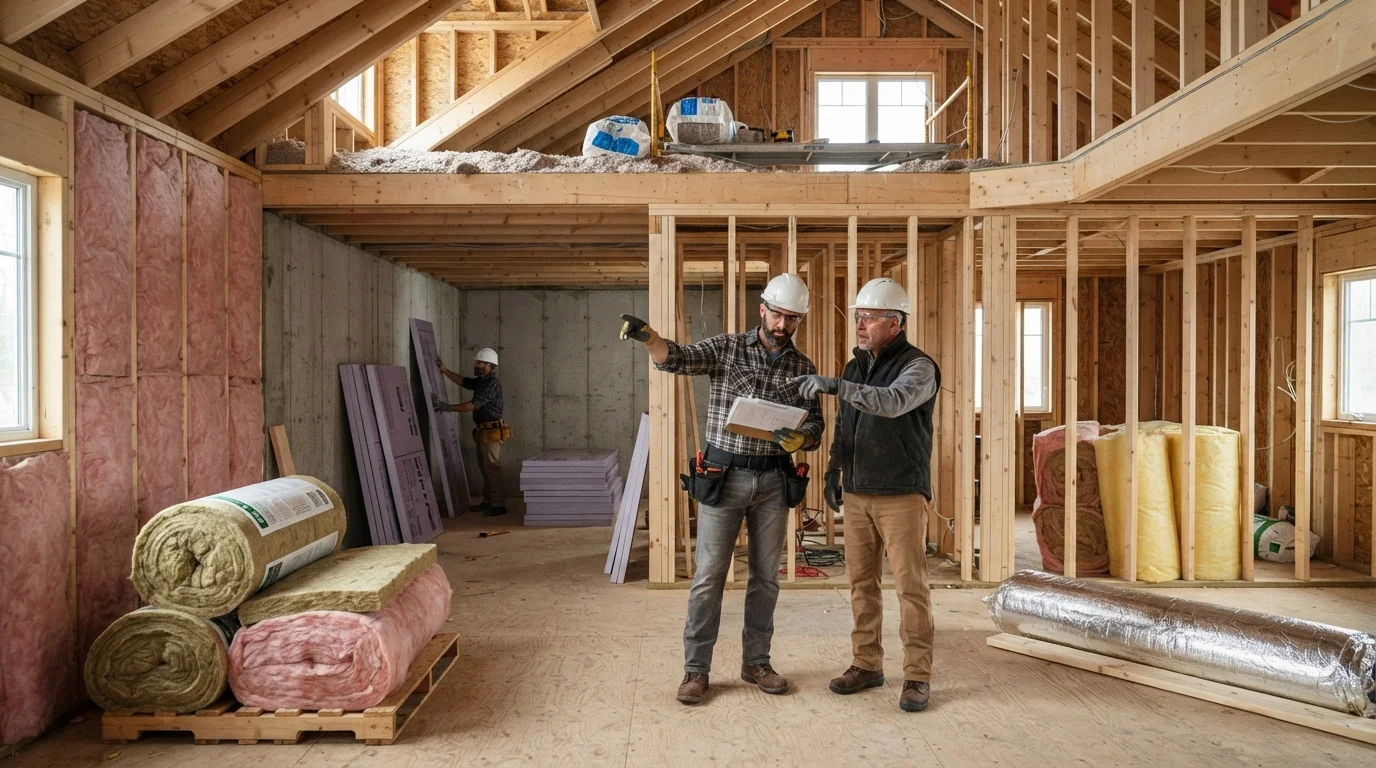
Neglecting attic insulation while focusing only on walls.
Why it happens: Walls are visible and feel intuitive as a source of heat loss. The attic floor, however, is where a large share of conditioned air escapes, because heat rises and cool air sinks through any gap between living space and an unconditioned attic.
Keeping an old water heater without reviewing its efficiency.
Why it happens: Water heaters sit in basements or utility closets and rarely cause obvious problems until they fail entirely. Homeowners tend to replace them reactively rather than proactively, missing years of efficiency gains.
What a home energy audit actually tells you
Before spending money on improvements, a professional home energy audit gives you a specific picture of where your house loses energy. An auditor uses tools like a blower-door test, which depressurizes the home to find air leaks, and thermal imaging cameras that show insulation gaps invisible to the naked eye.
25-30%
Share of home heating and cooling lost to air leaks
The U.S. Department of Energy estimates that air leaks account for roughly 25 to 30 percent of heating and cooling energy use in a typical home.
~10%
Potential annual savings from thermostat setbacks
According to the U.S. Department of Energy, setting back the thermostat 7 to 10 degrees for 8 hours a day can reduce annual heating and cooling costs by approximately 10 percent.
14-18%
Share of home energy used for water heating
The U.S. Department of Energy reports that water heating is one of the largest single energy expenses in most American homes.
Utility companies in many states offer free or subsidized audits to residential customers. The U.S. Department of Energy also provides guidance on finding certified auditors through the Building Performance Institute (BPI) or RESNET. The audit report typically ranks improvements by cost-effectiveness, so you can start with the changes that deliver the most reduction per dollar spent.
Federal tax credits under the Inflation Reduction Act (passed in 2022) cover a portion of costs for qualifying insulation, windows, doors, and heat pumps. Individual eligibility depends on household income and the specific improvement, so consulting a tax professional before making purchases is worthwhile.
This article is for general informational purposes only and does not constitute financial, tax, or professional home-improvement advice. Always verify current program eligibility and local code requirements with qualified professionals before making decisions.