
How an auto loan works
An auto loan is a secured installment loan. You borrow a set amount to buy a vehicle, then repay it in fixed monthly payments over an agreed period. The vehicle itself is the collateral, meaning the lender can repossess it if you stop making payments.
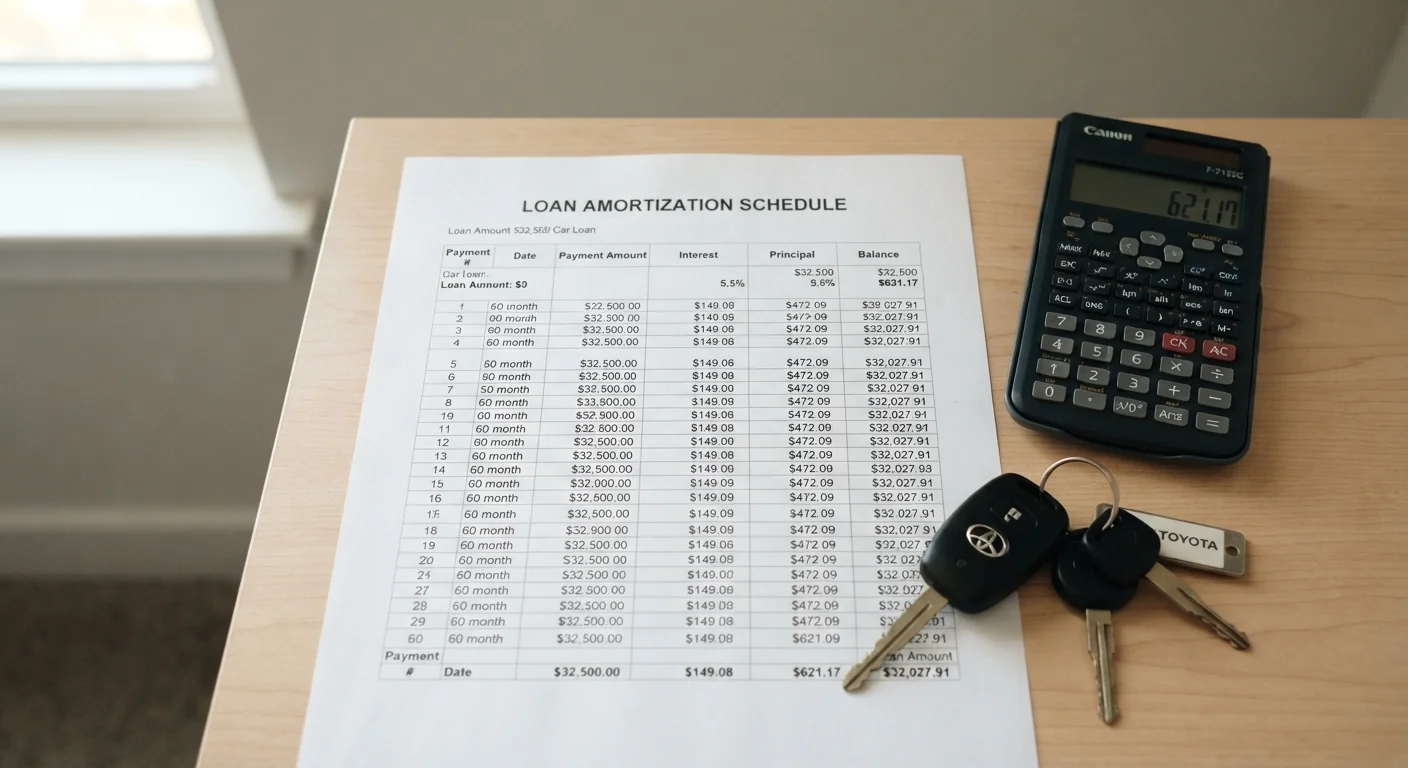
Each payment covers two things: a portion of the principal (the amount you borrowed) and interest (the cost the lender charges for lending you money). Early in the loan, more of each payment goes toward interest. Over time, that balance shifts toward reducing the principal. This process is called amortization, and it affects how much you owe if you decide to pay off the loan or sell the car mid-term.
For a broader grounding in borrowing concepts, responsible borrowing principles covers the habits that apply across every type of loan.
Principal
The original amount you borrow, not counting interest. Your payments reduce the principal over the life of the loan.
APR
Annual percentage rate. It expresses the yearly cost of borrowing, including the interest rate and certain fees, as a single percentage.
Loan term
The length of time you have to repay the loan, usually stated in months (for example, 48 or 72 months).
Pre-approval
A conditional offer from a lender that tells you approximately how much you can borrow and at what rate, before you choose a specific vehicle.
Hard inquiry
A credit check that a lender performs when you formally apply for a loan. It can lower your credit score slightly and stays on your report for two years.
Amortization
The process of paying off a loan through scheduled payments. Early payments go mostly toward interest; later payments shift toward reducing principal.
Your credit score and what lenders look at
Lenders use your credit score as one signal of how likely you are to repay. A higher score generally means a lower interest rate. The difference between a strong score and a weak one can translate to hundreds of dollars in extra interest over the life of a typical auto loan.
Beyond the score, lenders look at your debt-to-income ratio (how much of your monthly income already goes to existing debt payments), your employment history, and the size of any down payment you plan to make. A larger down payment reduces the amount you borrow and may help you qualify for a better rate.
Check your credit report before you apply
You can request a free copy of your credit report from each of the three major bureaus once per year at AnnualCreditReport.com. Review it for errors before any lender does. A reporting mistake can lower your score and cost you a higher rate on every payment you make.
If any term here is unfamiliar, the personal finance terms glossary defines concepts like credit utilization and amortization in plain language.
Where to shop for a loan
Auto loans are available through several types of institutions, and each has different criteria and rate structures.
- Banks and credit unions lend directly to consumers. Credit unions are member-owned and sometimes offer lower rates than commercial banks, though membership requirements vary.
- Online lenders often have a faster application process and may serve borrowers with a wider range of credit profiles.
- Dealership financing is convenient but works through a third-party lender. Rates can be competitive, but they can also include a dealer markup above the lender's base rate.
Dealer financing and rate markups
When a dealership arranges financing, the lender may allow the dealer to add a margin above the base rate. This markup is legal but not always disclosed separately. Having a pre-approval in hand before you negotiate gives you a concrete rate to measure the dealer's offer against.
Comparing offers across at least two or three sources before committing is a reasonable approach. The comparison between personal loans and credit cards illustrates why the source of borrowing affects total cost, a principle that applies here as well.
Getting pre-approved
Pre-approval means a lender has reviewed your credit and income and issued a conditional offer: a loan amount and an interest rate. You have not committed to anything yet, but you have a real number in hand.
That number matters at the dealership. When you know your rate, you are comparing the dealer's financing offer to something concrete rather than guessing whether it is good. If the dealer can beat your pre-approved rate, take it. If not, use your pre-approval.
Applying to multiple lenders within a short window (typically 14 to 45 days, depending on the credit bureau's model) usually counts as one inquiry rather than several, which limits the effect on your credit score.
Loan terms and total cost
Loan terms for auto financing commonly run from 36 to 84 months. A shorter term means higher monthly payments but less total interest. A longer term lowers the monthly payment but you pay more overall, and you may end up owing more than the car is worth partway through the loan (sometimes called being underwater or upside-down on the loan).
When comparing offers, use the APR, not the monthly payment, as your measuring stick. A lender with a lower APR costs you less even if the monthly payment looks similar to a competitor's. How term length shapes the true cost of a car works through specific examples worth reviewing before you decide on a term.
Monthly payment focus can obscure total cost
Dealers sometimes extend loan terms to make a payment fit your budget. A 72-month or 84-month loan may look affordable month to month, but the total interest paid can be significantly higher than a shorter loan. Always calculate the full amount you will repay, not just the payment. See how term length shapes total cost for a detailed breakdown.
Red flags to watch for
A few patterns tend to cost first-time buyers money.
- Being quoted only a monthly payment without a clear loan amount, rate, or term. Always ask for all four figures in writing.
- Add-on products (extended warranties, gap insurance, paint protection) bundled into the loan without clear disclosure. Each adds to your principal and the interest you pay on it.
- Prepayment penalties that charge you a fee for paying off the loan early. Not all loans include these, but checking the agreement for that clause before signing takes only a few minutes.
- Financing approved on the spot at the dealership before a background check is complete. Some buyers have driven home only to receive a call days later saying the terms changed.
Before you sign anything, questions worth asking before you sign an auto loan is a practical checklist for that final review.
This article is for general informational purposes only and does not constitute financial or legal advice. Loan terms, rates, and lender requirements vary. Consult a licensed financial professional for guidance specific to your situation.