What the interest rate actually tells you
Every loan has two numbers that often get confused: the interest rate and the APR. The interest rate is the simpler of the two. It tells you what percentage of your outstanding principal you owe in interest each year. If you borrow $10,000 at a 7% interest rate, you owe $700 in interest during the first year (before any principal payments reduce the balance).
That figure, on its own, does not tell you what the loan costs to obtain. Lenders charge origination fees, underwriting fees, broker fees, and sometimes points (prepaid interest) to close a loan. None of those costs appear in the interest rate. A lender advertising a 5.9% rate may actually cost more than one advertising 6.2%, once fees are counted.
For a broader reference on terms like these, see this personal finance glossary.
How APR closes the gap
APR takes the interest rate and folds in the fees the lender requires to fund the loan. The result is spread across the loan term and expressed as a yearly percentage, using a method standardized under the Truth in Lending Act. Because every lender must calculate it the same way, APR gives you a single number that reflects total borrowing cost on a comparable basis.
Two loan offers with identical interest rates can carry different APRs if one lender charges a 2% origination fee and the other charges nothing. The APR will surface that difference. That is why regulators treat APR as the primary disclosure number, not the interest rate.
Match loan terms before comparing APRs
APR comparisons are most accurate when the loans have the same repayment term. A shorter term spreads fees over fewer months, which raises the APR even if the fee amount is identical. Always compare loans of the same length side by side.
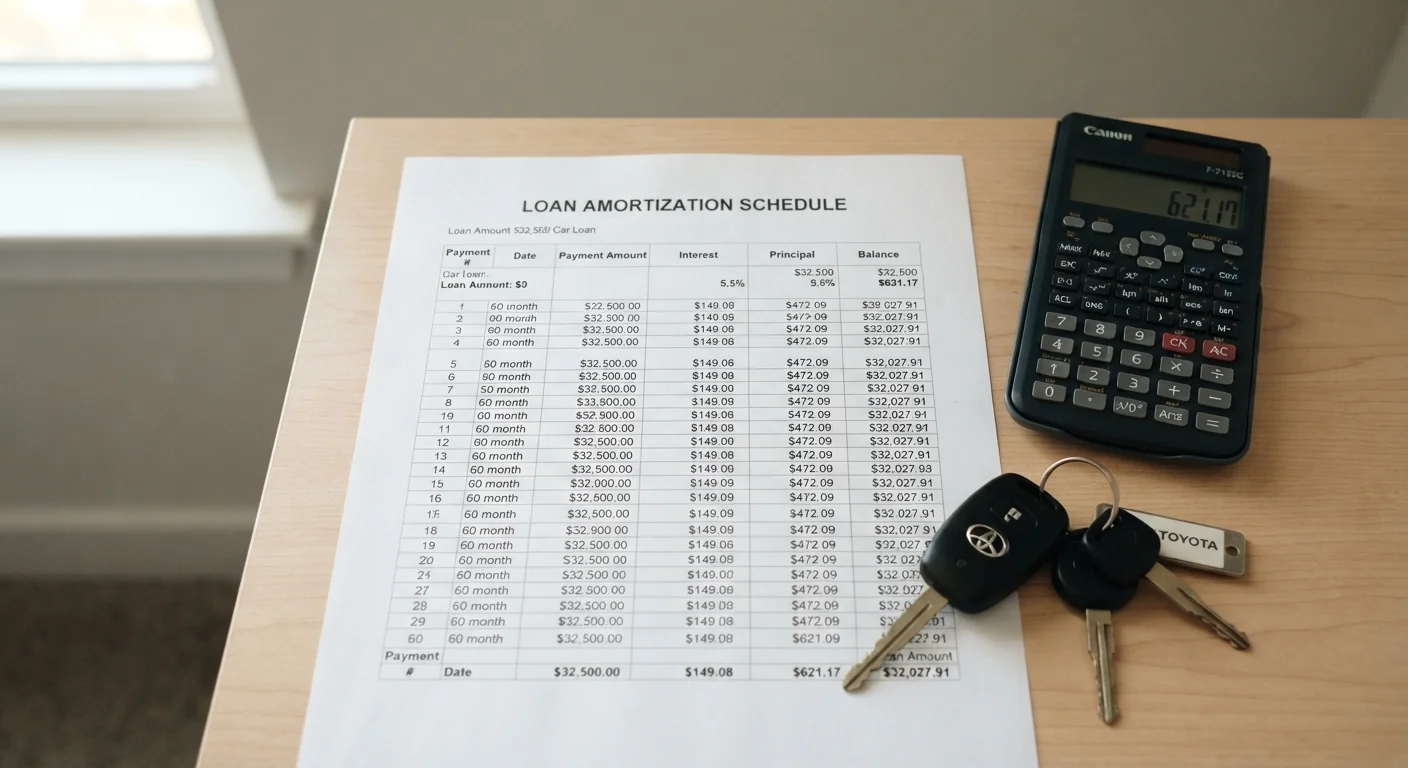
When comparing APRs, match loans with similar term lengths. A 36-month loan and a 60-month loan may have the same interest rate, but fees spread over a shorter term produce a higher APR. Comparing them directly can mislead. See how term length shapes total cost for a practical illustration.
When APR has limits as a comparison tool
APR works well when you hold a loan to its full term. If you pay off the loan early, you will have paid the fees but avoided some of the interest, which changes what you actually paid relative to the advertised APR. In that scenario, a loan with a lower APR but higher fees can end up costing more than one with a slightly higher APR but fewer upfront charges.
APR also does not capture every cost. Optional products such as credit insurance or debt cancellation agreements are generally excluded. On mortgage loans, costs like title insurance and escrow setup may or may not be included depending on how the lender categorizes them. Reading the full loan estimate remains necessary.
For loans where rate structure matters as much as cost, understanding fixed versus variable rates is a logical next step. For a comparison of borrowing products, personal loans versus credit cards shows how total cost varies across common options.
Putting both numbers to work
When you receive a loan offer, use the interest rate to understand what you will pay in interest each month. Use the APR to compare that offer against others, since it accounts for how fee-heavy each lender's structure is. If two loans carry the same APR, look at the fee breakdown directly to understand which costs are fixed (paid at closing) versus built into the rate.
On auto loans specifically, the APR disclosed in the financing agreement is the number worth scrutinizing before you sign. These questions can help you evaluate an auto loan before committing.
Knowing both figures, and what each one leaves out, puts you in a better position to evaluate any loan on its actual cost rather than its headline number.
This article is for general informational purposes only and does not constitute personalized financial or legal advice. Consult a licensed financial professional for guidance specific to your situation.